Building a cottagecore wardrobe doesn’t require a trust fund or a trip to expensive boutiques. In fact, thrifting is the most cottagecore way to build your closet—it’s sustainable, budget-friendly, and yields unique vintage pieces that mass-market retailers can’t replicate.
This guide teaches you exactly what to look for, where to shop, and how to turn secondhand finds into a cohesive cottagecore wardrobe.
Why Thrifting is Perfect for Cottagecore
Thrifting aligns perfectly with cottagecore values:
- Sustainability: Reusing clothing reduces waste and environmental impact
- Authenticity: Vintage pieces have genuine character and history
- Quality: Older garments were often made better than modern fast fashion
- Uniqueness: You won’t see your outfit on everyone else
- Affordability: Build a beautiful wardrobe on any budget
- Slow fashion: The hunt itself becomes a mindful activity
What to Look For: Dresses
1970s Prairie Dresses
The holy grail of cottagecore thrifting. Look for:
- High necklines with lace or ruffle trim
- Puff sleeves (short or long)
- Flowing, full skirts
- Calico prints, small florals, gingham
- Natural fabrics (cotton, cotton blends)
- Brands: Gunne Sax (highly collectible), Jessica McClintock, handmade pieces
Price range: $15-$50 at thrift stores; $50-$200+ for Gunne Sax on resale platforms
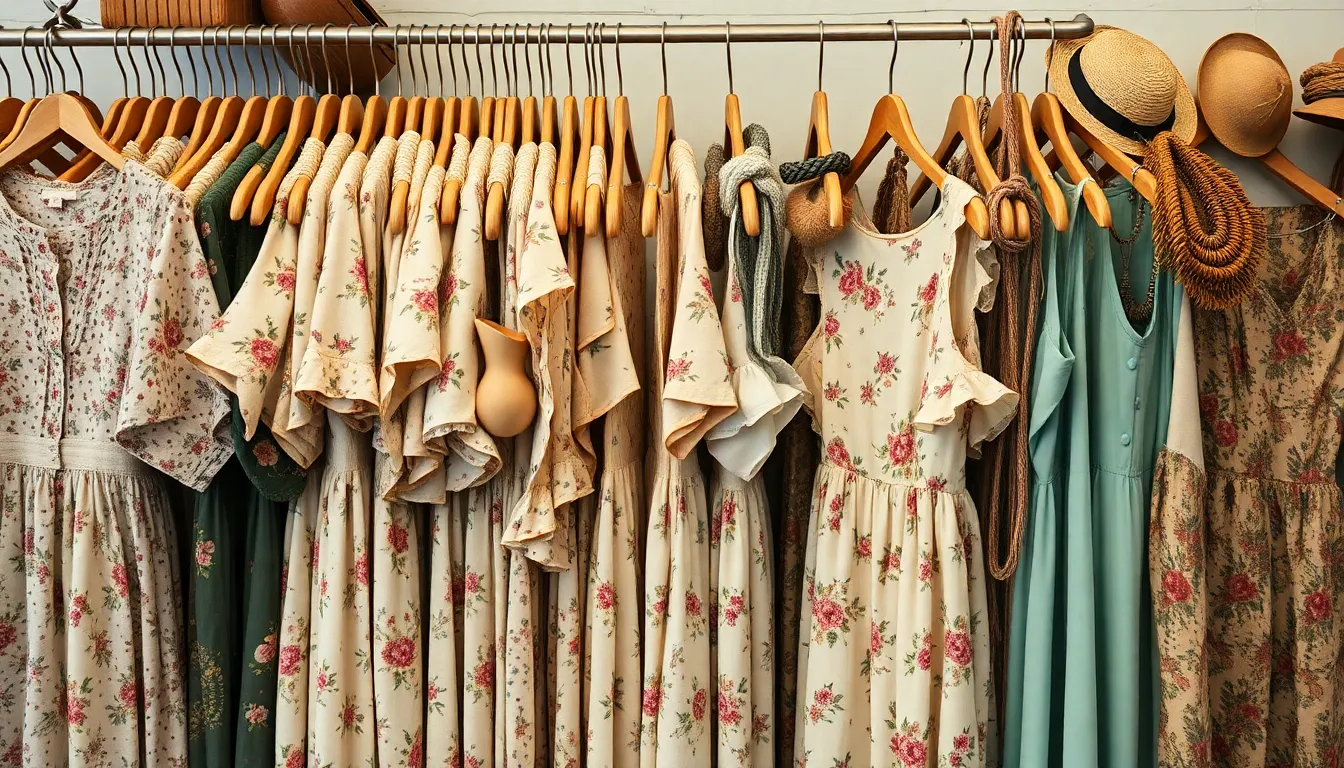
Floral Midi & Maxi Dresses
From the 80s and 90s—often overlooked but perfect for cottagecore:
- Muted floral prints on dark or cream backgrounds
- Button-front or wrap styles
- Rayon, cotton, or cotton-blend fabrics
- Modest necklines and longer lengths
White Cotton Dresses
Eyelet, lace, embroidered—any white cotton dress with feminine details works:
- Summer dresses from any decade
- Communion or confirmation dresses (for shorter styles)
- Nightgowns that could pass as dresses
Linen Dresses
Often found in the “grandma” section of thrift stores:
- Simple shift or A-line shapes
- Neutral colors: cream, sage, dusty rose, natural linen
- Can be refashioned with minor alterations
What to Look For: Tops
Peasant & Poet Blouses
Look in multiple sections—women’s, vintage, even costume:
- Gathered necklines (can be worn on or off shoulder)
- Bell or puff sleeves
- Embroidery, lace trim, or eyelet details
- Cotton, linen, or cotton blends
- Hungarian, Mexican, and Romanian embroidered blouses are perfect
Flannel Shirts
Men’s section often has the best options:
- Muted plaids: forest green, rust, cream combinations
- Soft, worn-in fabrics (avoid stiff new-looking ones)
- Oversized for layering
Knit Sweaters & Cardigans
- Cable-knit in cream, oatmeal, or sage
- Wool or wool-blend (check for moths!)
- Grandpa cardigans with interesting buttons
- Fair Isle or folk patterns
Victorian-Style Blouses
- High necklines with lace or pintucks
- Leg-of-mutton sleeves
- White or cream cotton
- Often found in formal or vintage sections
What to Look For: Bottoms
High-Waisted Jeans
Vintage denim is superior to modern equivalents:
- True high-rise (above the belly button)
- Straight leg or slight bootcut
- Medium to light wash
- Brands: Levi’s (especially 501s), Wrangler, Lee
Fit tip: Vintage sizing runs smaller. Check measurements, not size labels.
Corduroy Pants & Skirts
- Earthy tones: brown, rust, olive, cream
- High-waisted styles
- Wide or straight leg for pants
- A-line or midi for skirts
Long Flowing Skirts
- Broomstick skirts from the 90s
- Tiered cotton or rayon skirts
- Vintage wool skirts in winter weights
- Maxi lengths in solid colors or subtle prints
What to Look For: Outerwear
Chore Coats & Work Jackets
Check men’s section for authentic workwear:
- Canvas or duck cotton
- Olive, tan, or navy
- Brands: Carhartt, Dickies, vintage French chore coats
Wool Coats
- Vintage wool coats in camel, cream, or muted colors
- Check for moth damage carefully
- Look for interesting collars, buttons, or belts
Denim Jackets
- Vintage Levi’s or Wrangler
- Medium wash, slightly oversized
- Well-worn and soft
What to Look For: Accessories
Bags
- Wicker and straw baskets (check hardware and condition)
- Leather satchels and crossbody bags
- Canvas totes
- Vintage purses in neutral colors
Scarves
- Silk scarves with floral prints
- Wool scarves in solids or plaids
- Bandanas in subtle prints
Jewelry
- Vintage brooches
- Pearl necklaces and earrings
- Cameos and lockets
- Gold-tone chains and delicate pieces
- Pressed flower jewelry
Hats
- Straw sun hats
- Wool berets
- Vintage scarves for headscarves
Where to Thrift
Best In-Person Options
- Goodwill: Hit or miss, but good prices. Visit often.
- Salvation Army: Similar to Goodwill, regional selection varies
- Local charity thrift stores: Often better curation than chains
- Estate sales: Excellent for vintage pieces and quality items
- Church rummage sales: Hidden gems at rock-bottom prices
- Vintage shops: Pre-curated but higher prices
- Consignment stores: Quality pieces, mid-range prices
Online Thrifting
- Depop: Good for vintage and trendy cottagecore pieces
- Poshmark: Wide selection, can negotiate prices
- ThredUp: Huge inventory, searchable by style
- eBay: Best for specific vintage items (Gunne Sax, Levi’s)
- Etsy: Curated vintage, higher prices but quality selection
- Facebook Marketplace: Local pickup, often great prices
Thrifting Tips & Strategies
Before You Go
- Know your measurements (bust, waist, hips, inseam)
- Wear easy-on, easy-off clothing for trying on
- Bring a phone charger (for price checking, inspiration)
- Have a mental list of what you need
- Set a budget to avoid impulse buying
In the Store
- Check every section: Don’t skip men’s, kids’, or housewares (for textiles)
- Look at fabric first: Touch everything—natural fibers feel different
- Check construction: Seams, hems, buttons, zippers
- Inspect for damage: Stains, holes, missing buttons, stretched elastic
- Try everything on: Sizing is inconsistent, especially vintage
- Think creatively: Can it be altered? Styled differently? Repurposed?
Evaluating Finds
Ask yourself:
- Does it fit well or can it be easily altered?
- Is the fabric quality and condition good?
- Will I actually wear this, or just admire it?
- Does it work with things I already own?
- Is the price fair for the item’s condition?
Alterations & Refashioning
Don’t pass on pieces that need minor work:
Easy DIY Fixes
- Hemming too-long skirts or dresses
- Replacing buttons with vintage ones
- Adding a belt to define waist
- Taking in side seams
- Shortening sleeves
Worth a Tailor
- Taking in shoulders (complicated)
- Replacing zippers
- Significant resizing
- Relining vintage pieces
Refashioning Ideas
- Turn a too-short dress into a top
- Add lace trim to plain items
- Dye faded pieces (natural dyes for extra cottagecore points)
- Combine elements from two damaged pieces
Building a Cohesive Wardrobe
Tips for making thrifted pieces work together:
- Stick to a color palette: Cream, sage, dusty rose, brown—whatever your “colors” are
- Mix eras thoughtfully: 70s prairie + 90s denim works; don’t get too costumey
- Balance statement pieces: One vintage statement piece with simpler basics
- Invest in quality basics: Sometimes new basics fill gaps between vintage finds
- Curate ruthlessly: Don’t keep items just because they were a good deal
Thrifted Outfit Formulas
Everyday Cottagecore
Floral midi dress + cardigan + ankle boots
Casual Weekend
Vintage Levi’s + peasant blouse + basket bag
Layered Look
Turtleneck + pinafore dress + wool cardigan + boots
Summer Simple
White cotton dress + straw hat + sandals
Autumn Cozy
Flannel shirt + corduroy skirt + tall boots + wool scarf
FAQs
How do I find cottagecore items among all the stuff?
Train your eye to spot natural fabrics, muted colors, and vintage details. Skip the polyester, neon colors, and modern logos. With practice, you’ll scan racks quickly.
What if thrift stores in my area are picked over?
Try different neighborhoods, especially affluent areas or smaller towns. Estate sales and church sales often yield better finds. Online thrifting opens up national inventory.
How do I deal with thrift store smell?
Wash items immediately (or dry clean delicates). Sun and fresh air work wonders. Baking soda or white vinegar in the wash helps. The smell always fades.
Is it okay to buy fast fashion too?
A mixed approach is realistic. Thrift what you can, buy new basics if needed, and always prioritize quality over quantity. Don’t let perfect be the enemy of good.
Related: Best Cottagecore Dresses | Tops & Blouses | Etsy Shops | Fashion Hub
Disclosure: Some links may be affiliate links. Read our disclosure.